
The landscape transformation of the historic Church of the Dormition of the Mother of God – Icoanei, nestled in the heart of Bucharest, reimagines the church grounds as a contemporary interpretation of paradise—a living garden where spirituality, nature, and cultural memory converge. Inspired by the symbolic geometry of the Katholikon floor of Vatopedi Monastery on Mount Athos, the design translates ancient Byzantine cosmology into landscape form, creating a serene composition that reflects the dialogue between the earthly and the celestial realms.

Rooted in the unique genius loci of the Icoanei neighborhood—where traditional gardens, elegant urban planning, and centuries of spiritual heritage intertwine—the project creates a lush sanctuary within the city. Drawing inspiration from the flora of the Psalms and enriched with species adapted to Bucharest's climate, the garden unfolds through a refined palette of emerald greens, pearl whites, and amethyst-coral blooms that evolve throughout the seasons.
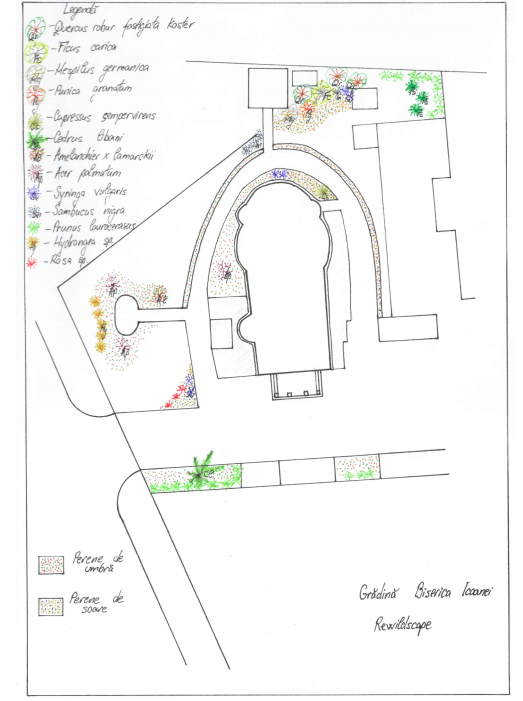
Key plant: Mespilus germanica, the medlar tree, a species deeply embedded in Byzantine culture and literature. Its symbolic role is illuminated by a remarkable passage preserved in the correspondence of Demetrios Kydones to Empress Helena Kantakouzene Palaiologina:
"For my fruit is sweeter than that of others, they said, and the best must be reserved to the emperors. And when it is time to pick the fruit, they say it is also time for them to enjoy it [...] although I swore to obey the emperors in all things by day, at night I exercise my rights, and, stealing my own fruit, I taste it and send some to those to whom it is right to send it, before sending it to the emperors."
— Demetrios Kydones, cited in Kianka, F. (1992) The Letters of Demetrios Kydones to Empress Helena Kantakouzene Palaiologina, Dumbarton Oaks Papers, Vol. 46, pp. 155–164.